Summary:
Water dripping through your ceiling at 2 AM. Shingles scattered across your yard after last night’s storm. A spreading stain on your bedroom ceiling that wasn’t there yesterday morning.
You’re dealing with a roof emergency, and you need answers fast. Not tomorrow. Not next week. Right now.
The good news? Taking the right steps in the next hour can mean the difference between a manageable repair and catastrophic damage that costs thousands to fix. The bad news? Water doesn’t wait, and every minute of hesitation gives it more time to spread through your insulation, saturate your drywall, and work its way into places you can’t even see yet.
Here’s what you need to know about emergency roof situations, what you can do immediately to protect your Talbot County home, and when it’s time to call in professionals who actually know how to stop the damage for good.
Emergency Leaking Roof Response: Immediate Action Steps
First things first: safety comes before your ceiling. If water is anywhere near electrical outlets, light fixtures, or appliances, shut off the power to that area at your breaker box. Don’t touch switches or outlets with wet hands, and keep everyone away from the affected area until you’ve secured the electricity.
Next, contain what you can from inside. Place buckets, pots, or any waterproof containers under active drips. If you’re seeing a bulge in your ceiling where water is pooling, carefully puncture the lowest point with a screwdriver or nail while holding a bucket underneath. It sounds counterintuitive, but a controlled release prevents the entire section from collapsing and dumping gallons of water onto your floors and furniture.
Move valuables away from the leak. Electronics, furniture, important documents—anything that water can ruin needs to be relocated now. Throw plastic sheeting or tarps over anything too large to move. Then grab your phone and start documenting everything with photos. Wide shots showing the whole room, close-ups of the damage, water in buckets, ruined belongings—insurance companies need this evidence, and photos taken during the actual event are hard to dispute later.
Emergency Roof Patch: When DIY Helps and When It Hurts
Here’s the reality about temporary roof patches: they can buy you time, but they can also make things worse if done incorrectly. A proper emergency patch isn’t about fixing the problem—it’s about preventing additional damage until professionals can provide a permanent solution.
If the weather has cleared and you can safely access your roof, a tarp might help. But “safely” is the critical word here. Wet roofs are slippery. Damaged roofs are unstable. If you’re dealing with active rain, high winds, or any condition that makes climbing dangerous, stay inside. No roof repair is worth a fall that could seriously injure or kill you.
For those who do attempt tarping, here’s what actually works versus what fails. Hardware store blue tarps secured with a few bricks will blow off in the next wind gust—especially here on Maryland’s Eastern Shore where coastal winds regularly gust to 45 mph or higher during storms. Professional emergency tarping uses commercial-grade materials, extends beyond the damaged area, and gets secured properly—often wrapped around boards and screwed through the tarp into the roof deck to distribute tension evenly. The tarp should ideally go over the roof’s peak and down the other side, using gravity to keep water from running underneath.
The bigger issue with DIY patches is what you can’t see. Water travels. A visible leak in your living room might be coming from damage 10 feet away on the roof, with water running along rafters or through insulation before it finally drips through your ceiling. Sealing the obvious spot with caulk or roofing cement doesn’t stop the water—it just redirects it to a new path, often into wall cavities or along fascia boards where it causes hidden rot and mold. You think you’ve solved the problem, but you’ve actually just made it harder to find and more expensive to fix later.
That’s why temporary measures work best when they’re truly temporary—a tarp to get you through the weekend until a professional can assess the real damage on Monday. Trying to patch your way out of a roof emergency rarely saves money. It usually just delays the inevitable while the hidden damage keeps spreading.
Emergency Roof Replacement: Knowing When Repair Isn't Enough
Not every emergency ends with a simple repair. Sometimes the damage is extensive enough—or your roof is old enough—that replacement makes more financial sense than patching a failing system. The question is: how do you know which situation you’re facing when water is actively dripping into your home?
Roof age tells you a lot. If your asphalt shingle roof is over 20 years old and you’re dealing with significant storm damage, you’re likely throwing good money after bad with emergency repairs. A roof approaching the end of its lifespan doesn’t just fail in one spot—it’s vulnerable everywhere. Fix today’s leak, and next month’s storm creates a new one. You end up paying for multiple emergency calls, each with premium pricing, when a full replacement would have cost less overall and actually solved the problem.
The extent of damage matters too. When more than 30% of your roof shows damage, replacement typically becomes more cost-effective than extensive repairs. If the storm that caused your emergency leak also tore off shingles across multiple sections, damaged flashing in several areas, or compromised your roof’s structural integrity, you’re looking at repair costs that approach replacement pricing—without the benefit of a new roof that’s warrantied and built to last.
Here on Maryland’s Eastern Shore, storm damage often reveals underlying issues that have been building for years. Coastal wind patterns create uplift pressure that can be three times higher at roof edges and corners than center sections. Salt air accelerates corrosion on fasteners and flashing. Nor’easters bring sustained winds and driving rain that test every weak point in your roofing system. An emergency might be the final straw, but it’s rarely the only problem. Professional assessment can determine whether your roof failed because of one dramatic event or because an aging system finally gave out.
The replacement decision also depends on what the emergency damaged. If water has saturated your roof decking, caused structural damage to rafters, or led to widespread mold growth in your attic, you’re not just fixing shingles anymore. You’re restoring the entire roofing system, and at that point, replacement often makes more sense than trying to salvage compromised materials.
Insurance coverage plays a role too. If storm damage qualifies for insurance coverage, your out-of-pocket costs for replacement might not be dramatically different from extensive repair costs. Working with contractors who understand insurance processes—who know how to document damage properly and communicate effectively with adjusters—can make the difference between an approved claim that covers a new roof versus a denied claim that leaves you paying for repairs yourself.
When Emergency Roof Repair Requires Professional Intervention
Some situations are beyond DIY fixes, even temporary ones. Knowing when you’ve crossed that line prevents you from making a bad situation worse and helps you get the right help before damage escalates beyond control.
If water is actively pouring into your home—not just dripping, but flowing—you need professional emergency services now. Large-volume leaks indicate major roof failure, and the amount of water entering your home can cause structural damage, electrical hazards, and mold growth that starts within 24-48 hours in Maryland’s humid coastal climate. This isn’t a “wait until Monday” situation.
Visible structural damage requires immediate professional assessment. Sagging rooflines, ceiling bulges that indicate water pooling above, soft spots when you walk on the roof (if you can safely check from a ladder), or any sign that the roof’s structural integrity is compromised—these are emergencies that need expert evaluation. The risk of collapse or further failure is real, and only a professional can determine how safe your home actually is.
24 Hour Roof Leak Repair: What Emergency Services Actually Include
Emergency roofing services aren’t just about showing up fast—though response time matters when water is actively damaging your home. Professional emergency response includes immediate damage assessment, temporary protection that actually works, and a clear path forward to permanent solutions.
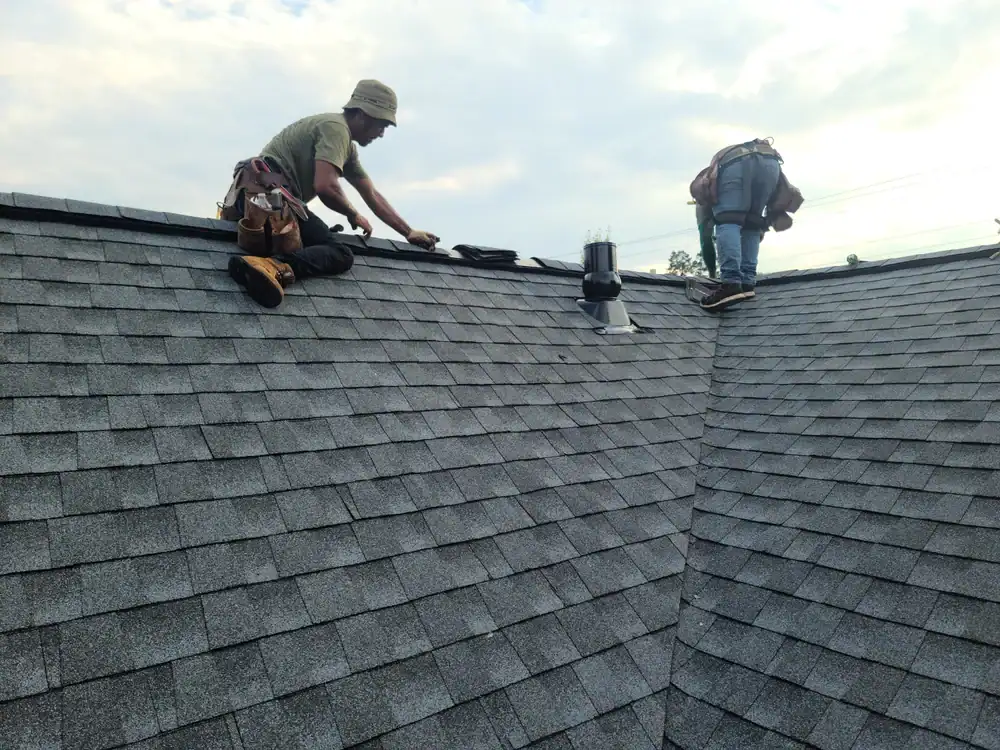
When you call for emergency roof repair, the first priority is securing your property against further damage. This means professional tarping with commercial-grade materials, not hardware store solutions that fail when the next rain hits. We use heavy-duty tarps designed for roofing applications, secure them properly to withstand wind, and ensure they extend beyond damaged areas to divert water away from vulnerable spots. This temporary protection buys you time to make informed decisions about permanent repairs without additional water intrusion making things worse.
The assessment process matters just as much as the immediate fix. A thorough emergency inspection doesn’t just look at the obvious leak—it traces water to its source, checks for hidden damage, evaluates structural integrity, and identifies any additional vulnerable areas that the same storm might have compromised. Water travels, and the drip in your living room might be coming from damage several feet away on the roof. Finding the actual source requires experience and systematic inspection, not guesswork.
Documentation is part of quality emergency service too. Insurance claims require proof—photos of damage, detailed notes about what failed and why, documentation of emergency measures taken to prevent further loss. We know exactly what adjusters need to see and how to present damage in ways that support your claim. We become your advocate in a process that can be confusing and frustrating when you’re already dealing with a damaged home.
Cost transparency should be part of emergency service, even when time is critical. Reputable contractors provide clear pricing for emergency work, explain what you’re paying for, and help you understand the difference between temporary protection and permanent repairs. Emergency work costs more than scheduled repairs—you’re paying for immediate availability, after-hours response, and the urgency of the situation. But that premium should be reasonable and clearly explained, not a surprise that shows up on the final bill.
The relationship between emergency response and permanent solutions matters too. The contractor who tarps your roof at 3 AM should be someone you’d trust to do the permanent repair next week. Emergency service is often the beginning of a longer relationship, and working with established, local contractors who’ll be around to honor warranties and stand behind their work makes more sense than hiring whoever answers the phone fastest.
Emergency Roof Repair Cost: What You'll Actually Pay
Emergency roof repair costs more than scheduled work, and understanding why helps you evaluate quotes and make informed decisions when you’re under pressure. The premium you pay for emergency service covers immediate availability, after-hours response, and the urgency of preventing additional damage to your home.
Most emergency repairs range from $250 to $10,000, depending on damage severity. Minor issues like replacing a few blown-off shingles or sealing a small leak might cost $250 to $1,000. Moderate damage requiring more extensive repairs typically runs $1,000 to $3,000. Major structural damage, large-scale leaks, or situations requiring significant temporary protection and complex permanent fixes can cost $3,000 to $6,000 or more.
Emergency service fees add to base repair costs. Expect a call-out fee of $100 to $300 just for immediate response, plus potential surcharges of 25-50% on labor rates for after-hours or same-day service. These premiums reflect the reality of maintaining emergency availability—contractors who offer 24/7 response keep crews on call, maintain emergency supply stockpiles, and prioritize your urgent situation over scheduled work.
Professional emergency tarping typically costs $200 to $1,500, depending on the size of the damaged area and complexity of installation. This temporary protection is usually money well spent. A $500 tarp service today can prevent $3,000 to $6,000 in water damage restoration costs tomorrow. Insurance companies recognize this too—most policies cover “reasonable and necessary” emergency mitigation measures, meaning your temporary protection costs may be reimbursable even if the underlying damage isn’t covered.
The hidden costs of delayed response often exceed emergency service premiums. Water damage spreads quickly. Mold begins growing within 24-48 hours in humid climates like Maryland’s Eastern Shore. What starts as a roof leak becomes ceiling replacement, insulation removal, mold remediation, and structural repairs when you wait too long to address the problem. Homeowners who delay calling for help because they’re worried about emergency service costs often end up paying far more for the additional damage that occurs while they wait.
Location affects pricing too. Maryland’s Eastern Shore sees regular storm activity, and demand for emergency services spikes after major weather events. Contractors may adjust pricing during peak demand periods, though established local companies with community ties are less likely to engage in price gouging than out-of-town “storm chasers” who flood the area after disasters.
Insurance coverage can offset emergency repair costs significantly, but only if you handle the claim process correctly. Most policies require notification within 24-48 hours of discovering damage. Document everything before any repairs begin—photos, videos, detailed notes about when the damage occurred and what caused it. Keep receipts for all emergency services, including tarping and temporary protection. Insurance companies should reimburse reasonable emergency mitigation costs, but you need proper documentation to support your claim.
Protecting Your Talbot County Home from Emergency Roof Damage
Emergency roof situations test your ability to act quickly under pressure. The steps you take in the first hour after discovering a leak—securing electricity, containing water, documenting damage, and getting professional help when needed—directly impact how much damage your home sustains and how much the repairs ultimately cost.
Living on Maryland’s Eastern Shore means your roof faces unique challenges. Nor’easters, coastal wind patterns, salt air corrosion, and regular storm activity create conditions that test roofing systems year-round. When those systems fail, you need contractors who understand local weather patterns, work directly with insurance companies, and respond quickly when emergencies strike.
We bring over 30 years of Eastern Shore experience to every emergency response, with GAF Master Elite certification that puts us in the top 2% of contractors nationwide. Our same-day response guarantee, in-house crews, and expertise in storm damage insurance claims provide the professional support Talbot County homeowners need when roof emergencies threaten their property and peace of mind.