Summary:
You’re standing on your flat roof, watching water pool where it shouldn’t. Or maybe you’re just planning ahead, trying to figure out which membrane will actually last without draining your budget. Either way, the TPO vs EPDM roofing decision matters more than most contractors let on.
The material you choose affects everything from your energy bills to how often you’re calling for repairs. But here’s the thing—there’s no universal “best” option. What works for a warehouse in Arizona might fail on Maryland’s Eastern Shore. What saves money upfront might cost you later. Let’s cut through the sales pitches and look at what actually matters for your building.
Flat Roof Material Comparison: TPO vs EPDM Performance
TPO and EPDM are both single-ply membranes, meaning they create a waterproof barrier in one continuous layer. But that’s where the similarities end.
TPO is a thermoplastic material—think of it as part rubber, part plastic. It’s typically white or light-colored, and installers literally melt the seams together using heat welding. EPDM is synthetic rubber, usually black, with seams that get taped or glued instead of welded.
These fundamental differences affect how each membrane handles your building’s specific challenges. The color difference alone can swing your cooling costs by hundreds of dollars annually. The seam methods determine whether your roof holds up to the next storm or starts leaking within five years.
Commercial Roof Membrane Durability and Lifespan
EPDM typically outlasts TPO when properly installed and maintained. You’re looking at 25 to 30 years or more for EPDM, compared to 15 to 25 years for TPO. Some well-maintained EPDM roofs push past 40 years.
But lifespan isn’t just about the material. Thickness matters more than most people realize. An 80-mil TPO membrane can outlast a 45-mil EPDM roof, even though EPDM generally lasts longer. The installation quality makes an even bigger difference—a poorly installed EPDM roof with weak seams won’t make it to 15 years, while a properly installed TPO system with heat-welded seams can exceed expectations.
Here’s what actually determines how long your roof lasts: the membrane thickness you choose, whether your contractor knows what they’re doing with seam installation, how much foot traffic your roof sees, and whether you keep up with maintenance. Climate plays a role too. Maryland’s coastal humidity and temperature swings test both materials differently than dry inland conditions.
TPO’s heat-welded seams create a bond that’s three to four times stronger than EPDM’s adhesive or taped seams. That strength advantage matters during storms when wind tries to peel your roof apart. But EPDM’s flexibility gives it an edge in cold weather—it can stretch up to 300 percent without tearing, while TPO becomes more rigid in freezing temperatures.
The puncture resistance difference is real. TPO handles foot traffic and dropped tools better than EPDM. If your roof sees regular maintenance activity or has HVAC equipment that needs servicing, that puncture resistance prevents the small damages that turn into big leaks.
EPDM’s track record is longer. It’s been protecting commercial buildings since the 1960s, so we know exactly how it ages. TPO showed up in the 1980s and was standardized in 2003, which means its long-term performance is still being proven. Some early TPO formulations had problems, though modern versions have addressed those issues.
Flat Roof Energy Efficiency: Which Membrane Saves Money
TPO’s reflective surface is where it pulls ahead on energy efficiency. That white or light-colored membrane reflects 80 to 87 percent of solar radiation, which means less heat transfers into your building. In practical terms, you’re looking at 20 to 30 percent lower cooling costs compared to a dark roof.
On a 90-degree day, a white TPO surface might register around 118 degrees Fahrenheit, while a black EPDM roof hits 170 degrees or higher. That 50-plus degree difference directly impacts how hard your air conditioning works. For commercial buildings in warm climates, those energy savings add up to thousands of dollars annually.
But EPDM’s dark surface isn’t always a disadvantage. In colder climates or during winter months, that heat absorption can actually reduce heating costs. The black membrane soaks up solar energy and transfers some of that warmth into the building. For facilities in areas with long, cold winters and mild summers, EPDM’s thermal properties might make more sense than TPO’s reflective surface.
Maryland’s Eastern Shore sits in a middle zone. You get hot, humid summers where TPO’s cooling benefits matter, but also cold winters where EPDM’s heat absorption helps. The energy efficiency winner depends on your specific building use and which season drives your highest utility costs.
White EPDM exists if you want rubber membrane durability with reflective properties, though it’s less common and costs more than standard black EPDM. Some property owners choose white EPDM to get the best of both materials—EPDM’s proven longevity with TPO-like energy efficiency.
The reflective benefit also helps your roof last longer. Lower surface temperatures mean less thermal stress on the membrane. TPO roofs experience less expansion and contraction throughout the day, which reduces the wear that eventually causes cracks and failures. That’s an indirect energy benefit that shows up in maintenance costs rather than utility bills.
If you’re pursuing LEED certification or other green building standards, TPO’s energy efficiency gives you an advantage. The reflective surface contributes to cool roof requirements, and both TPO and EPDM are recyclable at end of life, supporting sustainability goals.
Cost Analysis: TPO vs EPDM Installation and Maintenance
EPDM typically costs less upfront. You’re looking at roughly five to nine dollars per square foot installed, while TPO runs six to ten dollars per square foot. On a 10,000-square-foot commercial roof, that difference can be $10,000 or more.
But upfront cost isn’t the whole story. TPO’s energy savings can close that gap over the roof’s lifespan. If you’re saving $2,000 annually on cooling costs, that extra installation expense pays back in five years. Then you’re ahead for the next 15 to 20 years of the roof’s life.
Maintenance costs favor EPDM slightly. Repairs are simpler—you can patch EPDM with adhesive and tape, while TPO repairs require heat welding equipment and trained technicians. For small punctures or tears, EPDM’s repair simplicity means lower service call costs. However, TPO’s heat-welded repairs, when done correctly, are nearly as strong as the original membrane, while EPDM patches can become weak points if not installed properly.
Installation Methods and Labor Costs
Both membranes can be installed using three main methods: fully adhered, mechanically attached, or ballasted. Fully adhered systems use bonding adhesive to stick the membrane directly to the roof deck. Mechanically attached systems use plates and fasteners. Ballasted systems lay the membrane loose and hold it down with gravel or pavers.
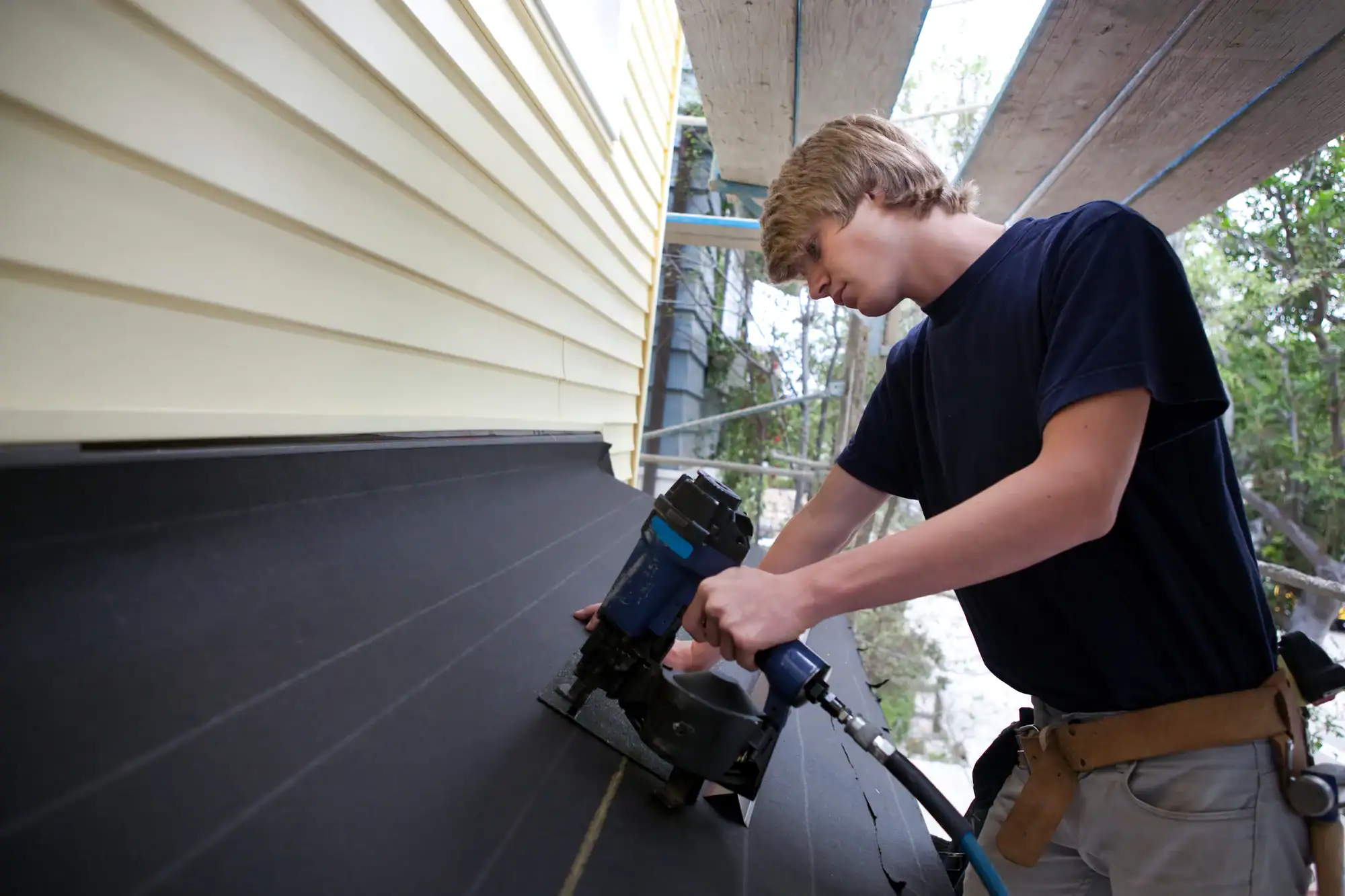
TPO installation requires more specialized skill because of the heat welding. Installers use hot-air welders to melt the overlapping edges of TPO sheets together, creating a seamless, watertight bond. This process demands proper equipment, training, and technique. If the welder temperature is wrong or the installer moves too fast or slow, you get weak seams that fail prematurely.
EPDM seams use self-adhesive tape or liquid adhesive. The process is more forgiving and requires less specialized equipment. That simplicity can reduce labor costs and makes EPDM installation faster in some cases. It also means emergency repairs can happen more quickly, since you don’t need specialized welding equipment to fix a leak.
Installation speed is similar for both materials when you have experienced crews. Large sheets come in rolls, and both membranes can cover significant square footage quickly. The difference is in the detail work—TPO’s heat welding takes more time at seams and penetrations, while EPDM’s adhesive application can be faster but requires careful attention to ensure proper bonding.
Weather during installation affects both materials. TPO welding requires dry conditions and appropriate temperatures. You can’t heat-weld TPO seams in rain or when it’s too cold. EPDM adhesives also have temperature and moisture requirements, but they’re generally less restrictive than TPO’s welding needs.
The roof deck condition matters more than most property owners realize. Both membranes need a clean, dry, properly prepared surface. If your existing roof has moisture issues, rot, or structural problems, those need addressing before any new membrane goes down. Skipping proper deck preparation is the fastest way to waste money on a roof that fails early, regardless of which membrane you choose.
Proper insulation installation happens during membrane replacement. This is your opportunity to improve energy performance beyond just the membrane choice. Adding insulation or upgrading to higher R-value products reduces heat transfer in both directions—keeping cool air in during summer and warm air in during winter.
Long-Term Value and Return on Investment
When you calculate total cost of ownership over 25 years, the material choice becomes less clear-cut. EPDM’s lower installation cost and longer lifespan give it an advantage in pure longevity per dollar. But TPO’s energy savings can swing the calculation the other way if your cooling costs are significant.
For a commercial building in Maryland with moderate cooling loads, here’s a rough comparison: EPDM might cost $60,000 to install on a 10,000-square-foot roof and last 30 years with minimal maintenance. TPO might cost $70,000 but save $2,000 annually in energy costs. Over 25 years, those energy savings total $50,000, making the TPO roof’s net cost $20,000 versus EPDM’s $60,000.
But that calculation changes based on your building’s specifics. A warehouse with minimal climate control doesn’t see much energy benefit from TPO’s reflectivity. An office building with significant air conditioning loads sees substantial savings. Your actual costs depend on building use, insulation levels, HVAC efficiency, and local utility rates.
Warranty coverage affects long-term value too. EPDM warranties typically cover 20 years, though some manufacturers offer longer coverage. TPO warranties can extend to 30 or 35 years depending on membrane thickness and whether you use enhanced versions. Working with a GAF Master Elite contractor like us gives you access to extended warranty options that aren’t available through standard contractors.
The warranty only matters if the company backing it is still around when you need it. That’s where working with established manufacturers and experienced local contractors matters. We’ve been serving Maryland’s Eastern Shore for over 30 years, which means we’ll be here to honor our workmanship warranty long after installation.
Resale value considerations come into play for commercial properties. A newer roof with remaining warranty coverage makes your property more attractive to buyers. TPO’s energy efficiency can be a selling point for environmentally conscious buyers or those looking to minimize operating costs. EPDM’s proven durability appeals to buyers who want low-maintenance, long-lasting systems.
Maintenance costs over the roof’s life shouldn’t be ignored. Both membranes need regular inspections, keeping drains clear, and addressing small problems before they become big ones. TPO requires keeping the surface clean to maintain reflectivity—dirt and debris reduce that energy-saving benefit. EPDM’s dark color hides dirt better but still needs inspection for punctures, seam issues, and general wear.
Choosing the Right Flat Roof Membrane for Your Property
The TPO vs EPDM roofing decision comes down to your specific situation. If energy efficiency and cooling cost reduction matter most—and you’re willing to pay slightly more upfront—TPO makes sense. If you want proven longevity, lower installation costs, and simpler repairs, EPDM is the better choice.
Climate plays a role too. Maryland’s hot summers favor TPO’s reflective properties, but the moderate climate means EPDM works fine if energy costs aren’t your primary concern. Buildings with regular roof access need TPO’s superior puncture resistance. Facilities in colder areas might prefer EPDM’s flexibility and heat absorption.
The most important factor isn’t the membrane material—it’s the installation quality. A properly installed EPDM roof with attention to seam detail and deck preparation will outlast a poorly installed TPO system every time. That’s where working with experienced contractors who understand local conditions makes all the difference. We bring three decades of Maryland Eastern Shore experience, GAF Master Elite certification, and in-house crews who know how to install both membranes correctly.