Summary:
Immediate Safety Assessment and Family Protection
Before you even think about climbing on your roof or grabbing a tarp, your family’s safety comes first. Roof damage often means structural instability, electrical hazards from damaged wiring, and dangerous debris that could fall without warning.
Start by moving everyone away from the damaged area inside your home. Water and electricity don’t mix, so if you see any signs of electrical damage near the leak, shut off power to that section of your house at the breaker box. Look up at your ceilings for sagging, bulging, or obvious water stains that indicate weight from pooled water above.
Never attempt to go on your roof during or immediately after a storm. Wet surfaces, loose materials, and compromised structural integrity create deadly conditions that have injured countless homeowners across Maryland’s Eastern Shore.
How to Identify Immediate Structural Dangers
As professional roofers, we know that the most dangerous roof emergencies aren’t always the most obvious ones. A small leak might seem manageable, but it could signal major structural damage that’s not visible from inside your home.
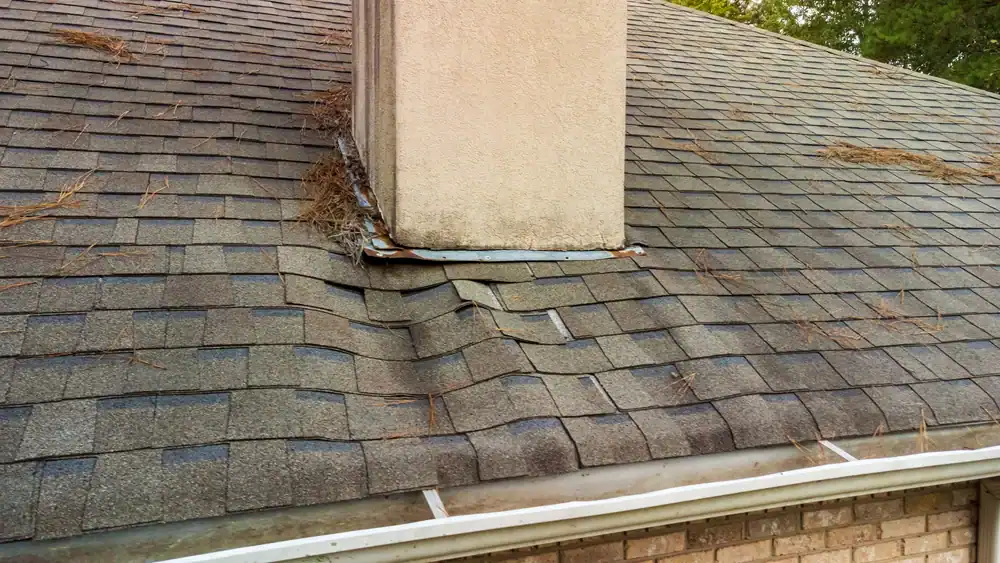
Check for these critical warning signs that require immediate evacuation and professional intervention. Sagging rooflines indicate compromised support beams that could collapse without warning. If you notice any part of your roof or ceiling drooping, even slightly, get everyone out of that area immediately. Water stains that appear suddenly and spread quickly often mean significant water accumulation above your ceiling. This weight can cause ceiling collapse within hours.
Listen for unusual sounds like creaking, groaning, or cracking coming from your roof structure. These sounds often precede structural failures. Look for daylight visible through your roof boards or attic space where it shouldn’t be. This indicates significant damage that’s letting in both light and water.
Electrical hazards multiply during roof emergencies. If you see any sparking, smell burning, or notice lights flickering in areas near the damage, shut off electricity to that section immediately. Water traveling along electrical wiring can cause fires or electrocution risks throughout your home.
Document everything with photos from a safe distance, but never put yourself at risk to get better pictures. Your insurance company needs documentation, but they’d rather process a claim than a liability lawsuit.
Emergency Contact Protocol That Saves Time and Money
The first hour after discovering roof damage determines how much you’ll ultimately pay for repairs. Quick action prevents minor issues from becoming major disasters, but only if you contact the right people in the right order.
Your first call should be to a licensed emergency roofing contractor, not your insurance company. Professional roofers can provide immediate temporary protection while documenting damage for your insurance claim. We understand what insurance adjusters look for and can help ensure you receive full coverage for necessary roof repairs.
We respond to Maryland emergencies within 2-4 hours because roof damage doesn’t wait for convenient timing. We’ve prevented over $1.2 million in water damage across Anne Arundel County since 2020 through rapid response and professional emergency tarping services.
Contact your insurance company after you’ve secured temporary protection. Many insurers have 24/7 claim reporting, but they can’t stop water from pouring into your home. Tell them you’ve contacted a licensed contractor for emergency services and that permanent repairs will be estimated once the situation is stabilized.
If you’re dealing with significant damage, contact your local building department to understand permit requirements. Some emergency repairs require permits, and starting without proper authorization can complicate insurance claims later.
Keep detailed records of everyone you contact, including names, claim numbers, and conversation summaries. This documentation becomes crucial if disputes arise during the claims process.
Professional Emergency Tarping and Temporary Protection
Emergency tarping isn’t just throwing a blue tarp over the damaged area and hoping for the best. Professional tarping requires specific materials, techniques, and safety equipment that most homeowners don’t have access to. Done incorrectly, tarping can cause more damage or create dangerous situations.
We use commercial-grade tarps designed to withstand Maryland’s weather conditions, from high winds to temperature extremes. These tarps feature reinforced edges, UV resistance, and waterproof materials that won’t deteriorate during extended exposure. Our installation process involves securing the tarp beyond the damaged area to create a watertight seal that directs water away from vulnerable spots.
Attempting DIY tarping puts you at serious risk of injury while likely providing inadequate protection for your home.
Why DIY Tarping Usually Makes Things Worse
Most hardware store tarps aren’t designed for roofing applications and fail within days of installation. Standard blue tarps tear easily, don’t seal properly around roof penetrations, and can actually trap water against your roof structure instead of directing it away.
Improper tarp installation creates new problems that we see regularly across Maryland. Tarps secured with inadequate fasteners blow off during the next storm, leaving your home even more exposed than before. Tarps that aren’t properly tensioned collect water and debris, creating heavy loads that can damage roof structures.
The biggest risk comes from homeowners attempting to install tarps on wet, damaged roofs without proper safety equipment. Emergency room visits from roof-related falls spike after every major storm because homeowners underestimate the dangers involved.
Professional installation uses specific attachment methods that seal around fasteners and prevent water infiltration. We understand how to position tarps to work with your roof’s drainage system rather than against it. We have the safety equipment and experience to work on compromised roof structures without risking injury.
Professional tarps can protect your home for weeks or months if necessary, giving you time to get proper estimates and schedule permanent repairs. DIY tarps typically fail within days, forcing you to start the process over while dealing with additional water damage.
Interior Water Damage Prevention and Containment
While professional help is on the way, you need to minimize interior damage from water that’s already entered your home. Quick action inside your house can save thousands in restoration costs and prevent mold growth that starts within 24-48 hours of water exposure.
Move furniture, electronics, and valuable items away from active leaks immediately. Use buckets, pots, or any containers to catch dripping water, but place towels underneath to prevent floor damage from splashing. If water is running down walls, use plastic sheeting to direct it into containers rather than letting it soak into flooring or baseboards.
Remove wet insulation from accessible areas like basements or crawl spaces. Wet insulation loses its effectiveness and becomes a breeding ground for mold and bacteria. It’s usually cheaper to replace than to attempt drying. Take photos of any insulation you remove for insurance documentation.
Increase ventilation in affected areas by opening windows and running fans if it’s safe to do so. Proper air circulation helps prevent mold growth and reduces humidity that can cause secondary damage. Dehumidifiers are extremely effective if you have access to them, but make sure electrical connections are safe before plugging in any equipment near water damage.
Document all interior damage with photos and videos, including close-ups of water stains, damaged materials, and any personal property that’s been affected. Insurance companies need this documentation to process claims accurately.
Don’t attempt to dry out large areas with household fans and dehumidifiers. Professional water damage restoration companies have industrial equipment designed for these situations. Your insurance may cover professional drying services, which are often more cost-effective than replacing everything that gets damaged by improper drying attempts.
Taking Action Before the Next Storm Hits
Maryland’s weather doesn’t give homeowners much warning before the next emergency strikes. These 7 critical steps give you a roadmap for protecting your family and property when roof damage occurs, but the best emergency plan starts with prevention and preparation.
Regular roof inspections, prompt minor repairs, and relationships with trusted professionals make all the difference when emergencies happen. Keep emergency contact information easily accessible, understand your insurance coverage before you need it, and never compromise on safety during crisis situations.
When roof emergencies strike your Maryland home, we provide the rapid response and professional expertise that protects your property and gives you peace of mind during stressful situations.