Summary:
How Ice Dams Form and Why Your Gutters Matter
Ice dams don’t just appear out of nowhere. They form when heat escapes through your attic and warms your roof surface. Snow melts, runs down toward the edges, and then refreezes when it hits the colder eaves where there’s no warm attic below.
That ice creates a dam. More melting snow backs up behind it with nowhere to go except under your shingles, into your roof deck, and eventually into your home. The damage shows up as ceiling stains, peeling paint, and soaked insulation—repairs that easily run $3,500 to $7,500 or more.
Your gutters play a bigger role in ice dam prevention than most people realize. When gutters are missing, damaged, or clogged, water can’t drain properly. It pools, freezes, and adds weight to your roofline. That’s extra stress on fascia boards and shingles that weren’t designed to handle it.
What Makes Prince George's County Winters Challenging for Gutters
Prince George’s County, MD sits in a climate zone that gets the worst of both worlds. We see enough snow to create ice dam conditions, but temperatures fluctuate enough to cause repeated freeze-thaw cycles. That’s harder on your home than consistent cold.
Recent winters have brought 6 to 10 inches of snow along the I-95 corridor, often mixed with sleet and freezing rain. Temperatures drop into the teens overnight, then climb just enough during the day to start melting. That cycle repeats for days or weeks, and each time it happens, more ice builds up along your roofline.
Prince George’s County, MD also averages 44 inches of rain annually—more than the 38-inch national average. All that precipitation has to go somewhere, and when your gutters aren’t functioning properly during winter, it goes exactly where you don’t want it: into your foundation, under your siding, and through any weak point it can find.
The coastal proximity adds humidity and salt air that corrodes metal components faster than in drier climates. Older sectional gutters with multiple joints are especially vulnerable. Those seams leak, trap water, and fail right when you need them most.
Maryland’s Eastern Shore faces additional wind exposure that puts stress on gutter hangers and connections. When snow and ice add weight to a system that’s already compromised, failures happen fast. You’ll see gutters pulling away from the fascia, downspouts separating, or entire sections collapsing under the load.
This isn’t theoretical. Insurance claims for ice dam damage and gutter failures spike every winter across Anne Arundel County, MD, Talbot County, MD, and throughout the region. Homeowners who thought they could wait until spring end up dealing with emergency repairs in the middle of a storm—and paying premium rates for the privilege.
Why Seamless Gutter Installation Outperforms Sectional Systems in Winter
Traditional sectional gutters have joints every 10 feet where pieces connect. Those joints are sealed, but seals fail. Water seeps through, freezes, expands, and makes the problem worse. Each freeze-thaw cycle damages the connection a little more until you’ve got a leak that won’t stop.
Seamless gutter installation eliminates most of those weak points. Seamless gutters are fabricated on-site from a single piece of aluminum, custom-cut to your home’s exact measurements. The only seams are at corners and where gutters meet downspouts—a fraction of the failure points you’d have with sectional systems.
When water can’t leak through seams, it flows where it’s supposed to: down and away from your foundation. That consistent drainage prevents the standing water that turns into ice. It also means less weight on your gutter system overall, which reduces stress on hangers and fascia boards.
Aluminum seamless gutters handle Maryland winter conditions particularly well. The material doesn’t become brittle in cold temperatures the way vinyl does. It won’t crack when ice forms, and it flexes slightly under snow load instead of snapping. That durability matters when you’re dealing with repeated freeze-thaw cycles and heavy, wet snow that’s common in Bowie, MD and surrounding areas.
The seamless design also means better water flow during rapid snowmelt. When temperatures jump from 20 degrees to 40 degrees in a few hours—common in Prince George’s County, MD—a lot of snow melts fast. Seamless gutters handle that surge without overflowing at weak joints.
Proper installation makes a difference too. Seamless gutters are installed with hidden hangers and correct slope to ensure water keeps moving. Standing water is your enemy in winter. Even a small amount can freeze overnight and start the ice dam cycle. Professional seamless gutter installation with the right pitch prevents that problem before it starts.
You’ll also avoid the debris trap that sectional gutter seams create. Leaves and pine needles get caught at joints, creating blockages that hold water. Seamless systems stay cleaner with fewer maintenance headaches, which is especially valuable when you’re not climbing ladders in winter weather to clear clogs.
The Strategic Advantages of Winter Gutter Installation
Installing gutters in winter sounds counterintuitive, but the timing actually works in your favor. Contractors aren’t slammed with spring projects yet, which means better availability and often better pricing. You’re not competing with every other homeowner who waited for warm weather.
More importantly, you’re protecting your home before the worst weather hits. January and February bring some of Maryland’s heaviest snow and coldest temperatures. Installing gutters in early winter means your roofline is protected before those conditions arrive, not after they’ve already caused damage.
The installation process itself works fine in winter for aluminum seamless gutters. Unlike vinyl, which becomes brittle and difficult to work with in cold temperatures, aluminum maintains its properties. We can fabricate and install your system efficiently even when it’s cold outside.
How Winter Installation Prevents Spring Water Damage
Spring brings rapid snowmelt and heavy rain—often at the same time. If your gutters aren’t ready to handle that volume, you’re looking at foundation problems, basement flooding, and landscape erosion. By installing in winter, your system is in place and tested before spring’s challenges arrive.
Think about what happens during a typical Maryland spring thaw. Temperatures rise quickly, sometimes jumping 30 degrees in a day or two. All that accumulated snow melts at once, sending massive amounts of water off your roof. If your gutters are missing, damaged, or inadequate, that water pours directly onto your foundation.
Foundation repairs start around $2,000 for minor issues and climb past $10,000 for serious damage. Basement waterproofing runs $3,000 to $7,000. Those costs dwarf the investment in proper gutter replacement, and they’re entirely preventable with the right system installed at the right time.
Spring also brings severe thunderstorms that dump inches of rain in short periods. Prince George’s County’s 44 inches of annual rainfall doesn’t fall evenly—much of it comes in heavy bursts during spring and summer storms. Your gutters need to handle those surges without overflowing.
When you install in winter, you have time to test the system with actual precipitation before the spring deluge. You’ll know if adjustments are needed while there’s still time to make them. Discovering a problem during a spring downpour means dealing with water damage while trying to fix the issue.
Landscaping protection matters too. Spring is when your yard recovers from winter and starts growing again. Water cascading off a roof without gutters erodes soil, washes away mulch, and drowns plants. That’s hundreds or thousands of dollars in landscape damage on top of structural concerns.
Installing gutters before spring also means your contractor can take proper time with the job. Spring rush means crews are working fast to keep up with demand. Winter gutter installation gets more attention to detail because the schedule isn’t packed. You get better quality work when installers aren’t racing to the next job.
What to Expect from Professional Winter Gutter Installation
Professional gutter installation in winter follows the same quality standards as any other season, with a few additional considerations for weather conditions. We know how to work efficiently in cold weather while maintaining installation quality.
The process starts with accurate measurements and assessment of your current roofline condition. Fascia boards need to be solid and properly aligned to support new gutters. If there’s existing damage from ice or water, it gets addressed before new gutters go up. Skipping that step means mounting a new system to a compromised structure, which leads to failures down the road.
Seamless gutters are fabricated on-site using a specialized machine mounted on our truck. The aluminum coil feeds through, forming your gutters to the exact lengths needed. This happens regardless of temperature, though extremely cold days might require some adjustments to the process.
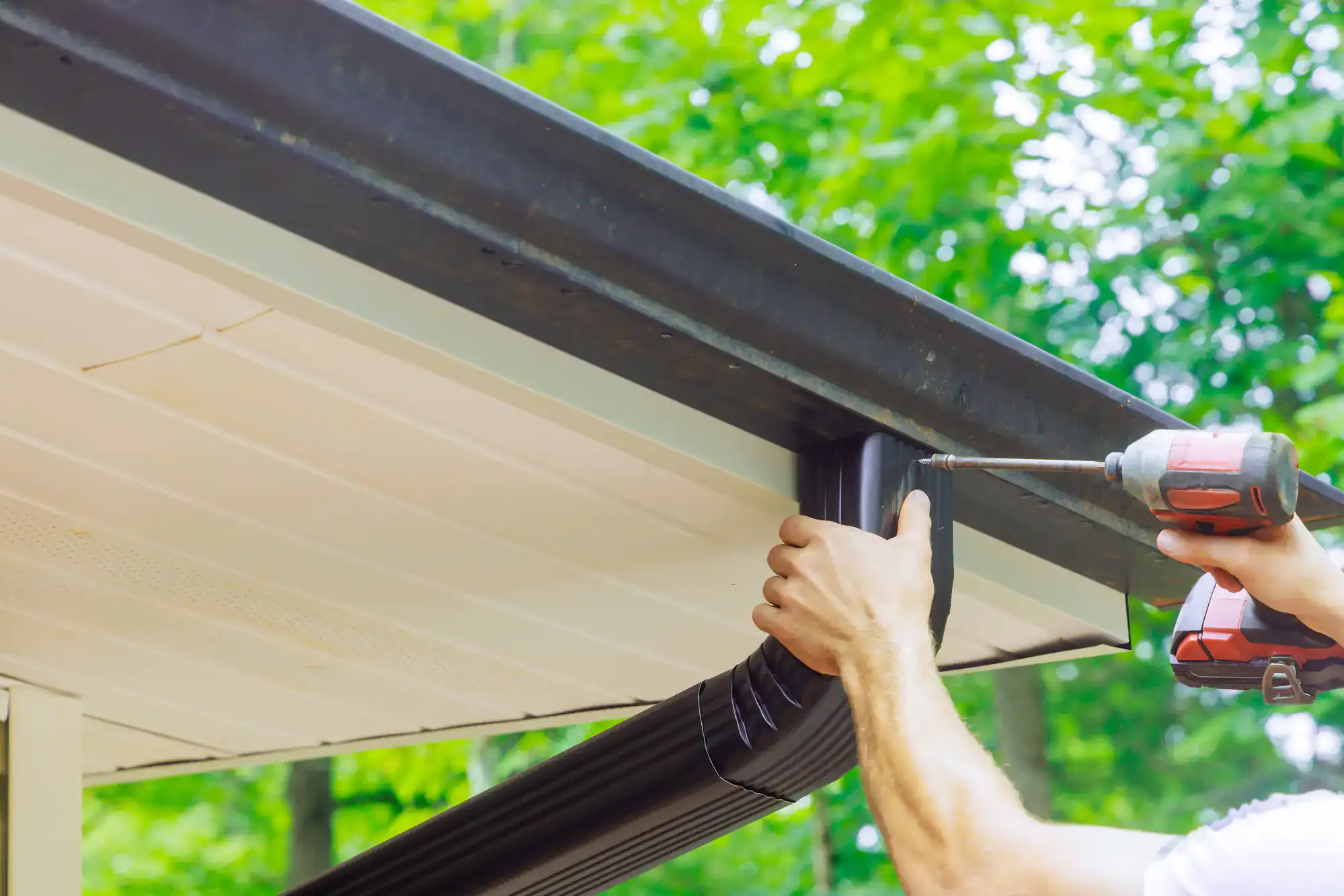
Installation includes proper hangers spaced correctly for snow load—typically every 24 inches or less in areas that see significant winter weather. Those hangers need to be secured into solid wood, not just fascia but into rafter tails when possible. That extra holding power matters when ice and snow add weight to the system.
Correct slope is critical for winter performance. Gutters should pitch at least a quarter inch per 10 feet toward downspouts. That gradient keeps water moving instead of pooling and freezing. We use levels and string lines to ensure consistent slope along the entire run.
Downspout placement and extensions matter as much as the gutters themselves. Water needs to discharge at least 4 to 6 feet away from your foundation, and downspouts should be positioned to avoid creating ice hazards on walkways or driveways. Extensions that direct water away from the house prevent the foundation problems that gutters are meant to solve.
Most residential gutter installations complete in one to two days, weather permitting. Extreme conditions—heavy snow, ice storms, dangerous wind—will delay the work, but normal winter cold doesn’t stop the process. We communicate about weather-related scheduling and ensure your home stays protected throughout the installation.
The system gets tested before the job is considered complete. Running water through the gutters shows whether drainage is working correctly and reveals any leaks or issues that need adjustment. You want to know the system works properly before the next storm, not during it.
Protecting Your Maryland Home Before Winter Weather Worsens
Waiting until spring to install gutters means gambling with your home’s protection during Maryland’s most challenging weather. Ice dams, water damage, and structural problems don’t pause while you wait for warmer weather—they get worse with every freeze-thaw cycle.
Winter gutter installation gives you the protection you need when you need it most, often with better availability and pricing than you’ll find during spring’s rush. Seamless aluminum gutters installed by experienced professionals handle Prince George’s County, MD snow, ice, and heavy rainfall while preventing the costly damage that comes from inadequate drainage.
If your gutters are failing, missing, or inadequate for winter conditions, now is the time to address it—not after ice dams have already formed or spring flooding has damaged your foundation. We bring 30 years of experience and GAF Master Elite certification to every project, ensuring your home gets the protection it deserves.