Summary:
Why Copper Gutters Outperform Aluminum in Marine Environments
Standard aluminum gutters weren’t designed for what your property faces. Salt air from the Chesapeake Bay accelerates corrosion five times faster than typical inland conditions. That’s why you see aluminum gutters on waterfront homes showing rust stains, pitting, and structural weakness within 10 years—sometimes sooner.
Copper behaves differently. The material doesn’t just resist salt exposure; it actually becomes stronger through a process called patination. When copper reacts with moisture and oxygen in coastal air, it forms a protective layer that bonds to the surface and prevents further oxidation underneath. Your gutters stay structurally sound while aluminum systems in the same environment are breaking down.
The difference shows up in longevity. Aluminum gutters last 20 to 30 years in ideal conditions—less near water. Copper gutters last 50 to 100 years regardless of coastal exposure. That’s not marketing language. That’s the reality of how these materials respond to the environment your property sits in every single day.
How the Patina Process Protects Your Investment
When you install copper gutters, they start with a bright, metallic penny-like shine. That appearance begins changing within months as the copper reacts with air and moisture. This isn’t damage or deterioration—it’s the beginning of a protective transformation that makes copper uniquely suited for waterfront properties.
The patina process happens in predictable stages. Within the first few months, that bright copper softens into warm caramel tones that many homeowners love because it looks rich and handcrafted. Over the next year or two, the surface continues darkening into deeper browns and eventually espresso-like shades. In high-humidity coastal areas like Talbot County, this progression happens faster than inland locations.
Eventually—typically within 5 to 20 years depending on your exact location and salt exposure—the copper develops the characteristic blue-green patina you see on historic buildings and the Statue of Liberty. This verdigris layer is copper oxide, and it acts as armor. The patina bonds tightly to the metal surface and creates a barrier against moisture, salt, and further oxidation. Unlike rust on steel or corrosion on aluminum, this layer doesn’t weaken the material. It strengthens it.
Here’s what matters for your decision: that protective layer means your gutters require virtually no maintenance. You’re not repainting. You’re not treating for rust. You’re not replacing sections that failed. The patina does the work, and the copper underneath stays intact for decades.
Some homeowners prefer to keep the bright copper appearance by applying protective coatings or using specialized cleaners. That’s an option, but it requires ongoing maintenance that defeats one of copper’s main advantages. Most people who choose copper for waterfront properties embrace the patina as part of the material’s character and protection system.
Structural Advantages for Chesapeake Bay Properties
Coastal storms, nor’easters, and the freeze-thaw cycles that hit Maryland’s Eastern Shore put serious stress on gutter systems. Copper’s physical properties make it better equipped to handle these conditions than alternatives.
The material has 40% greater tensile strength than aluminum, meaning it resists breaking, bending, and impact damage more effectively. When ice forms in your gutters during winter, copper maintains its structural integrity where aluminum might crack or pull away from fascia boards. When heavy downpours hit during summer thunderstorms, copper channels the water without sagging or developing the stress points that lead to leaks.
Weight matters here too. Copper is heavier than aluminum, which sounds like a disadvantage until you consider what that means during high winds. Lighter gutters can pull loose or get damaged when storms hit. Properly installed copper gutters stay secure because they have the mass to resist wind force while the material itself flexes slightly without breaking.
Installation quality makes a difference with any gutter system, but copper’s properties give you more margin for error when severe weather arrives. The material doesn’t rust when water sits in low spots. It doesn’t corrode when salt spray hits during coastal storms. It doesn’t weaken when temperatures swing from 20 degrees in January to 95 degrees in July.
For properties in St. Michaels, Oxford, or anywhere along the Eastern Shore where you’re dealing with water on multiple fronts—rainfall, humidity, salt air, and occasional flooding—copper’s structural advantages aren’t just nice to have. They’re the reason these systems last multiple generations while aluminum systems need replacement every couple of decades.
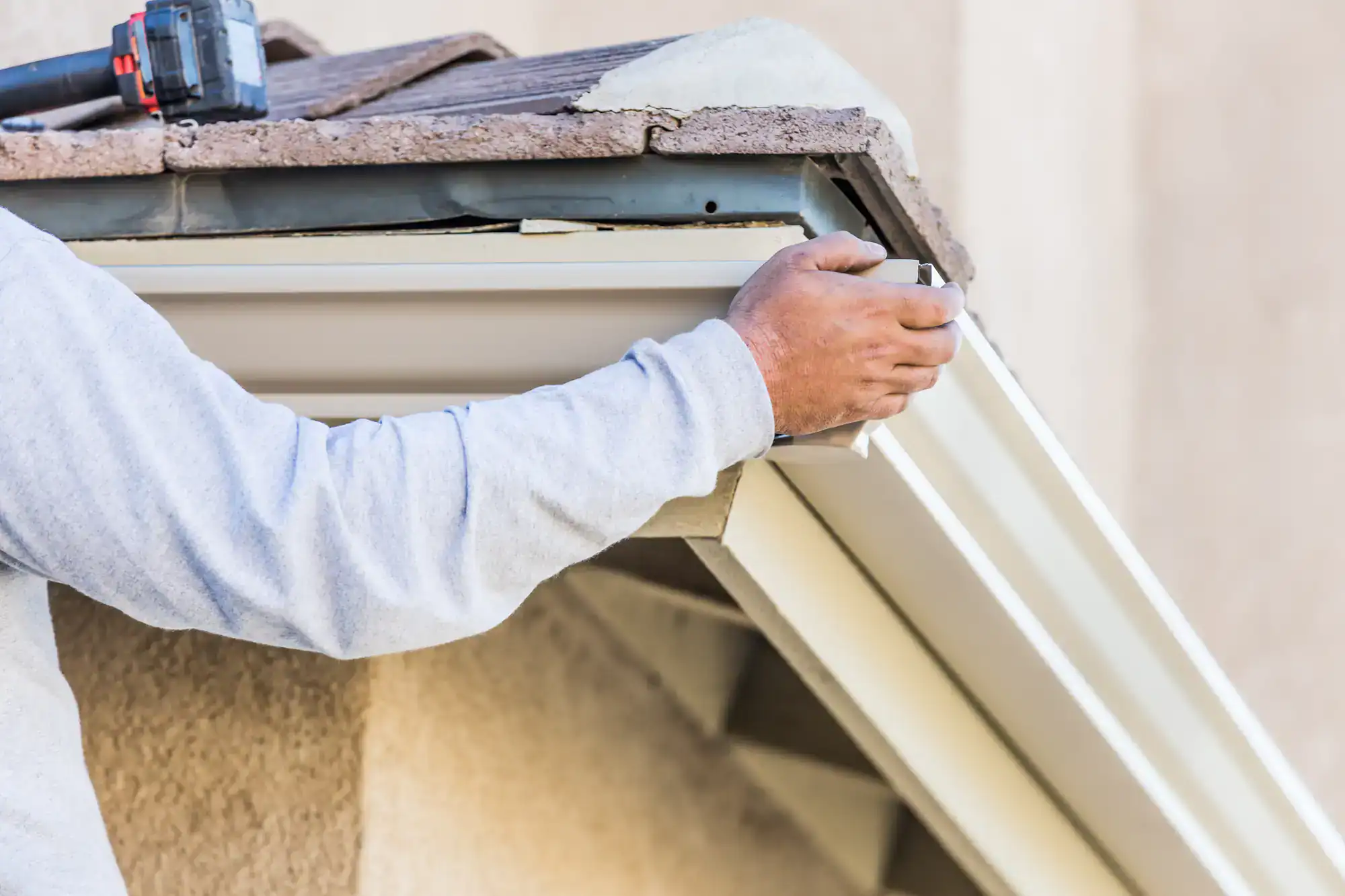
The seamless installation process also contributes to performance. Copper gutters are custom-fabricated on site to fit your home’s exact dimensions, which means fewer joints and connection points where leaks typically develop. Each section is soldered together using copper fittings and fasteners—no dissimilar metals that create galvanic corrosion. The entire system works as one integrated piece of architecture rather than multiple sections held together with sealant that degrades over time.
Architectural Integration for Historic and Luxury Homes
Copper gutters do more than move water off your roof. They become part of your home’s visual identity, especially on properties where architectural detail matters. If you own a historic estate in Oxford, a custom waterfront build in St. Michaels, or any property where curb appeal directly affects value, the material you choose for gutters sends a signal about quality and attention to detail.
The warm tones of copper—whether bright and new or aged with patina—complement the materials common to Eastern Shore architecture. Brick, stone, wood siding, and even modern materials all pair well with copper’s natural coloring. As the patina develops, it adds depth and character that aluminum’s painted finish simply can’t match.
Historic properties benefit particularly from copper’s flexibility and customization options. The material can be shaped into half-round profiles that match original gutter designs from colonial or Victorian-era homes. It can be formed to fit curved rooflines, complex architectural details, or unique features that standard aluminum systems can’t accommodate. For restoration projects where maintaining historical accuracy matters, copper is often the only material that delivers both authentic appearance and modern performance.
Cost Analysis: Investment vs. Expense
Copper gutters cost more upfront—typically $18 to $40 per linear foot installed compared to $4 to $14 for aluminum. For a typical waterfront home needing 200 linear feet of gutters, you’re looking at $3,600 to $8,000 for copper versus $800 to $2,800 for aluminum. That’s a significant difference that deserves honest discussion.
The cost equation changes when you factor in lifespan and maintenance. Aluminum gutters last 20 to 30 years in ideal conditions—less near saltwater. Copper lasts 50 to 100 years regardless of environment. If you replace aluminum gutters twice over 50 years, you’re paying for installation labor twice, dealing with the disruption twice, and still ending up with a system that needs replacing again. Copper installed once likely outlasts your ownership of the property.
Maintenance costs tell a similar story. Aluminum requires periodic repainting, rust treatment, and repairs to sections that corrode or develop leaks. Copper requires occasional cleaning to remove debris—the same maintenance any gutter system needs—but nothing beyond that. The patina protects itself. You’re not paying for touch-ups, sealant reapplication, or section replacements.
Property value considerations matter for high-end homes. Real estate data shows copper installations typically recover 85 to 90% of their cost at resale, compared to 60 to 70% for premium aluminum systems. Buyers recognize quality materials, and copper gutters signal that the property has been maintained with long-term thinking rather than short-term cost cutting.
For waterfront properties specifically, where salt air accelerates the deterioration of standard materials, copper moves from “luxury upgrade” to “practical necessity.” You’re not paying extra for aesthetics. You’re paying for a material that actually works in the environment your property sits in every day.
The question isn’t whether copper costs more initially. It does. The question is whether paying less now means paying more over time through repeated replacements, constant maintenance, and systems that fail when coastal weather hits hardest. For most waterfront property owners in Talbot County, Queen Anne’s County, and across the Eastern Shore, that math favors copper.
Installation Considerations for Eastern Shore Properties
Copper gutter installation requires specialized skills that not every contractor possesses. The material demands proper handling, precise fabrication, and knowledge of how copper behaves in marine environments. Choosing an installer with experience in waterfront properties makes the difference between a system that performs for decades and one that develops problems within years.
The installation process starts with assessment of your property’s specific drainage needs. Waterfront homes often deal with higher rainfall volumes, wind-driven rain, and soil conditions that require strategic downspout placement. Every property in St. Michaels or Oxford handles water differently based on lot slope, roof design, and proximity to the Bay. Custom fabrication accounts for these variables.
Copper gutters are formed on-site using mobile equipment, which means each section is made to your home’s exact specifications. There are no pre-cut pieces or standard lengths that get forced to fit. The gutters are seamless from corner to corner, with joints only at corners and downspout outlets. This seamless construction dramatically reduces potential leak points compared to sectional systems.
Proper installation also requires using all-copper components—hangers, fasteners, nails, and flashing. Mixing metals creates galvanic corrosion where different materials contact each other. An experienced installer knows this and sources the correct hardware. We also understand pitch requirements for optimal water flow, how to secure gutters to handle wind loads common near the Chesapeake Bay, and how to integrate the system with your existing roof structure without creating new problems.
The installation typically takes one to three days depending on your home’s size and complexity. During that time, our crew protects your landscaping, cleans up thoroughly, and tests the entire system before considering the job complete. You receive documentation for your insurance records and information about the warranties covering both materials and workmanship.
For historic properties, installation may require additional considerations to preserve architectural integrity while adding modern water management. This might mean matching specific profiles, working around decorative elements, or integrating new gutters with original features. With over 30 years of experience working on Eastern Shore historic homes, we understand these requirements and can navigate them without compromising either the home’s character or the gutter system’s performance.
The investment in professional installation protects your investment in the material itself. Copper installed correctly lasts generations. Copper installed poorly can develop issues that compromise performance and require costly corrections. Given the material cost, ensuring proper installation isn’t optional—it’s essential.
Making the Right Choice for Your Waterfront Property
Copper gutters represent a different approach to protecting waterfront properties. Instead of accepting that gutters will need replacement every couple of decades, you’re installing a system designed to last as long as your home stands. Instead of fighting salt air and humidity with materials that corrode, you’re using a material that strengthens in those exact conditions.
The patina process, the structural advantages in marine environments, and the architectural integration all point to the same conclusion: for high-end properties along Maryland’s Eastern Shore, copper isn’t just an aesthetic choice. It’s the material that actually works long-term in the environment you’re dealing with.
If you’re building, renovating, or replacing failing gutters on a property in Talbot County, Queen Anne’s County, or anywhere from Annapolis to the Delaware line, the decision comes down to whether you want to solve the problem once or revisit it repeatedly. At Bay Area Exteriors, we’ve been installing copper gutter systems on Eastern Shore properties for over 30 years, with the experience and GAF Master Elite certification that puts us in the top 2% of contractors nationwide. We understand what coastal properties need and how to deliver systems that perform for generations.